 What better way to kick off “The Spaghetti Capers” series here on The Hungry Crafter than with an old family recipe for that most enduring of Italian classics: spaghetti & meatballs. These are the meatballs of my childhood, the meatballs I dream of. The ultimate comfort food, embedded with a thousand memories.

Being a family recipe, the measurements are hardly precise, particularly for the meatballs. It’s been a “fiddle ’til perfect” type of recipe for me, as would be expected when the outcome you’re looking for is to reproduce a specific taste that you remember from being 5 years old. A good general rule of thumb I’ve discovered over the years is: more parmesan, less bread. It sounds so self-evident, but it’s really key.
First things first, though — get your sauce going. This last batch was truly fantastic, which I must credit in part to advice I received several years ago from my friend Peter. After I raved about a particular sauce he made, he pulled me aside and whispered in my ear, “The secret ingredient is time.” No, not thyme. Time. I let my rendition simmer for four hours, and I must say, I’m a big fan of the secret ingredient. While based on my grandmother’s sauce, I’ve made a few modifications to make this particular recipe uniquely mine! Here goes:
Jo’s Pasta Sauce
- 1 good glop of olive oil
- 1-2 shallots, diced
- 2 bulbs fennel, diced
- 3 carrots, diced
- 3-4 cloves minced garlic (Or more if you like. I often do.)
- 1 28-oz can crushed tomatoes
- 1 28-oz can whole tomatoes, with juice, squashed by hand (Yes, squashed. Of course that’s a technical term.)
- 1-2 parmesan cheese rinds
- pat of butter
- small handful basil leaves, chopped
- salt, pepper, & fresh lemon juice to taste
Warm olive oil in a large saucepan or stockpot. Add shallot, fennel, and carrots and cook over medium-high heat until everything is soft and the shallots are translucent. Add garlic and let cook just another minute (garlic burns easily!), then add both cans of tomatoes. Bring to a slow boil, then turn heat to lowest setting, add parmesan rinds, and let the sauce simmer for a good long time while you make meatballs, read the mail, gab on the phone or what have you. Just prior to serving, remove the parmesan rind(s) with a pair of tongs and discard. If you are cooking for anyone picky (ahem), you can use an immersion blender to smooth out any chunks in the sauce at this time. Add a pat of butter and the basil leaves, then season to taste with salt, pepper & lemon juice (go light on the lemon — it’s as needed for acidity only).
Now what about those meatballs?
Farina Family Meatballs
- 1 lb. hamburg
- 1 egg
- 2 good fistfuls of grated parmesan
- a slightly lesser amount of breadcrumbs
- handful of chopped fresh parsley (sub dried in a pinch, but really do try and use fresh)
- handful of raisins
- salt and pepper
You can see that this is a precise recipe indeed. Start by dumping all ingredients in a big bowl, except for the raisins. Here’s what my proportions looked like:
Mix ingredients together with your hands (stop as soon as it comes together; it’ll taste better if it’s not overmixed). If it seems too dry or bready, add a touch of milk and/or additional parmesan; if it’s too wet, add more breadcrumbs. Let this be your mantra: meaty cheesy, not bready goopy. When the consistency is where you like, add in raisins and mix with your hands. Roll into balls.
Working in batches so as not to overcrowd the pan, brown your meatballs on all sides in a skillet with a little bit of olive oil.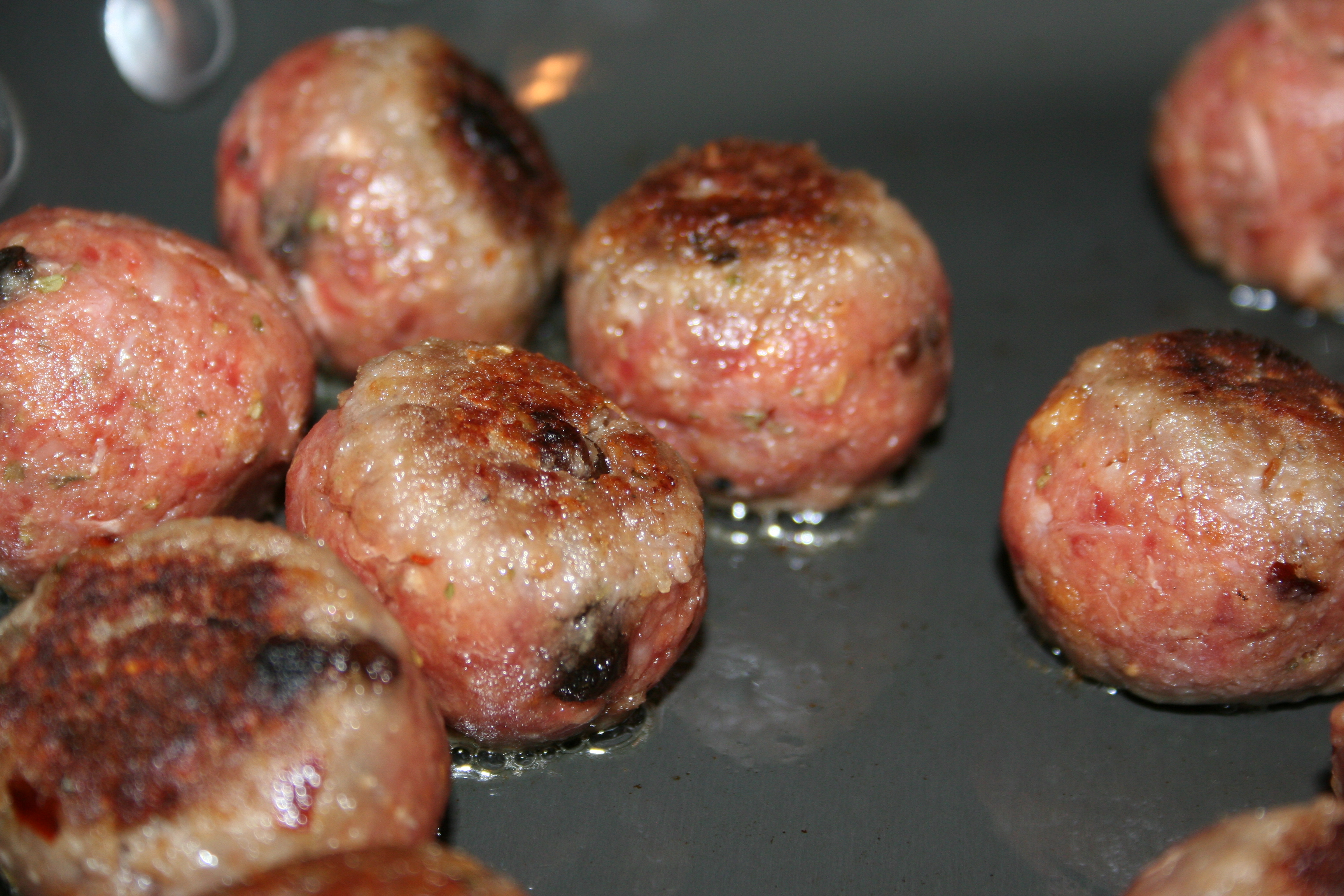
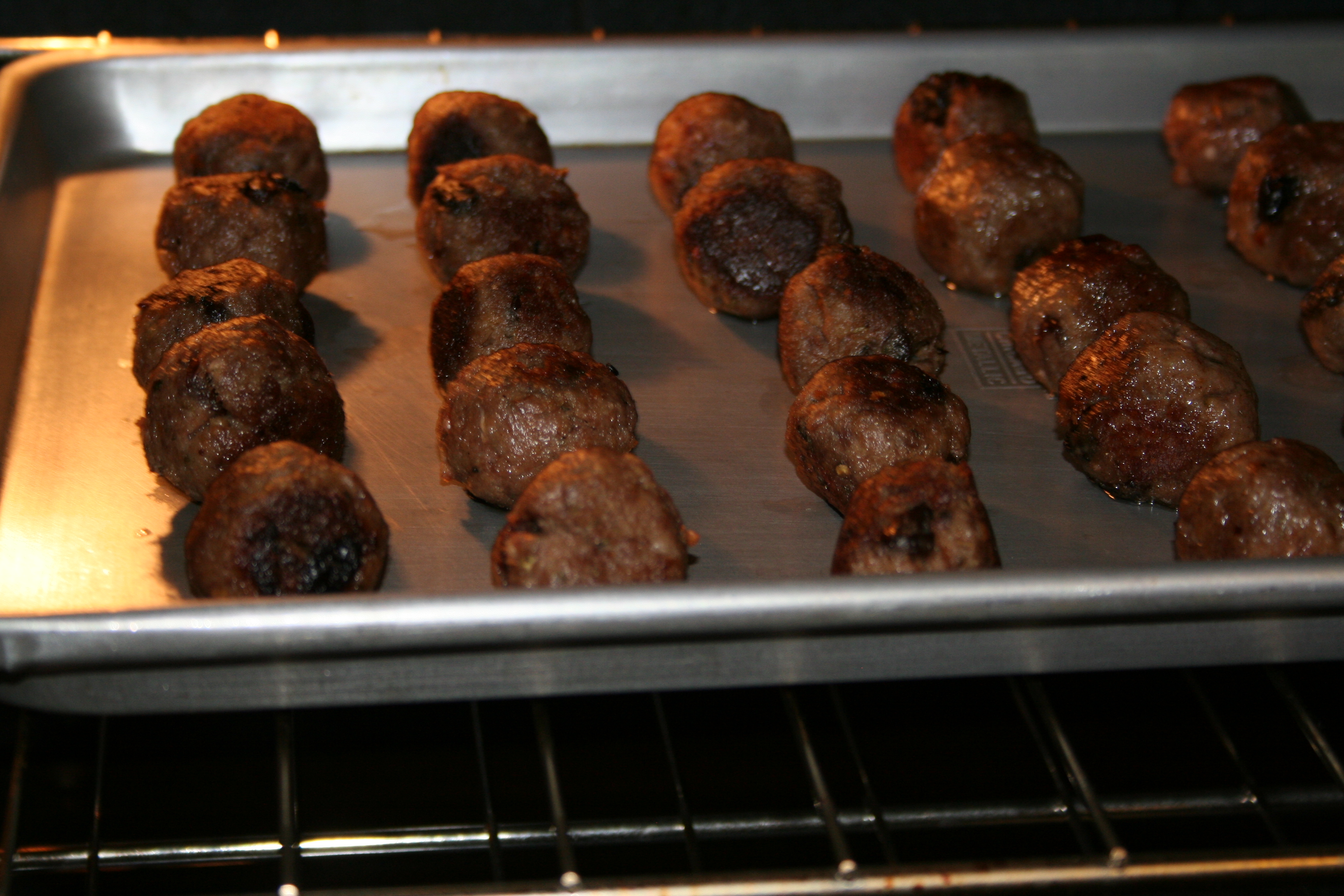
Remove browned meatballs to a jelly roll pan and finish in a 350 degree oven for 20-30 minutes, or until cooked all the way through.
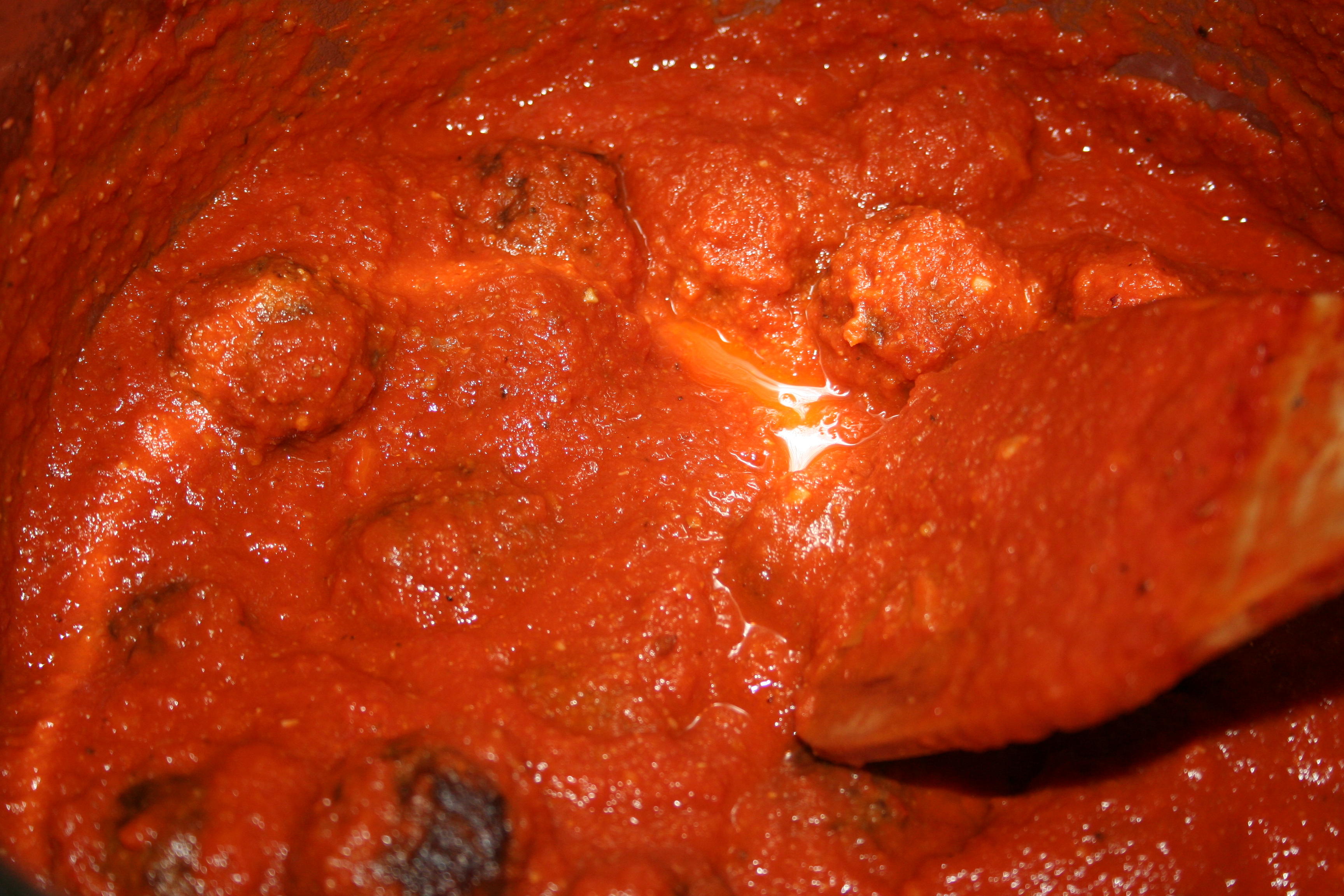
Carefully combine meatballs with your sauce and keep warm until ready to serve.
Now, to be fair and reasonable — this recipe should serve at least 4 people if served with a pound of pasta. Unless you are very hungry and gluttonous. (I, of course, know NO ONE like that!) In which case, remove yourself to the couch post haste, pull up a blanket, and proceed to moan and groan about how you ate too much for the next hour or so. It’s part of the family tradition.



 The Hungry Crafter